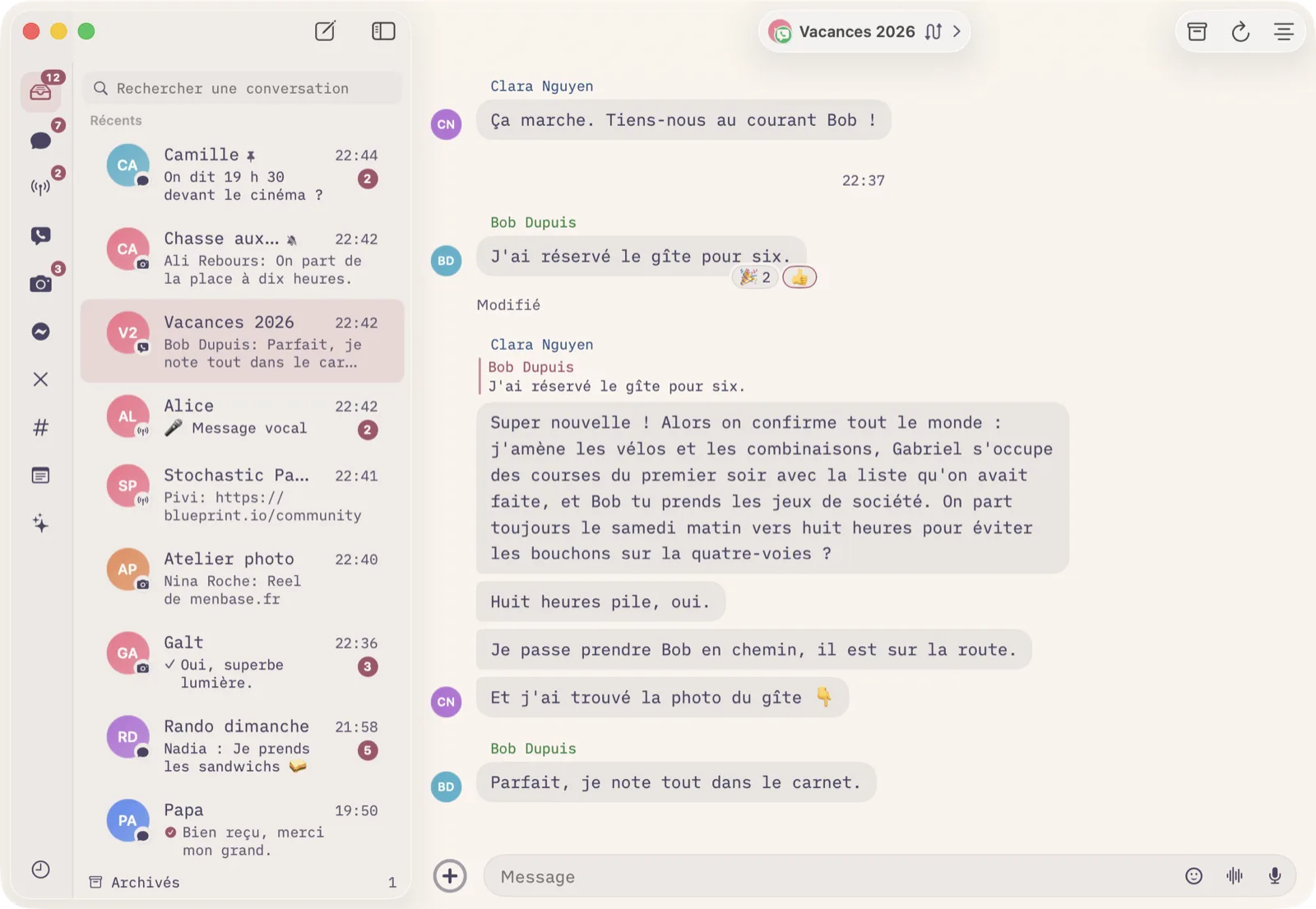
On Mac, iPhone and Linux. The assistant drafts a reply, you decide whether to send it. Everything runs at home.
Free, forever. Open source (MIT): the code is public · See what it’s for ↓


Use cases
A unified inbox already saves you time. The assistant is a second pen beside you: it writes, you decide, nothing goes out without you.

Buyers write on Messenger, WhatsApp and Instagram. One list, sorted by date. At the tenth “still available?”, ask the assistant for a polite reply and send it with one tap.

Customers write on Instagram, WhatsApp and Messenger. You answer from one place, on Mac and on iPhone, and hand the assistant the first draft of the replies that need care.

iMessage with your parents, WhatsApp with the cousins, Signal with friends, Messenger with the neighbour. One list, one notification, the same photo of Julie everywhere.

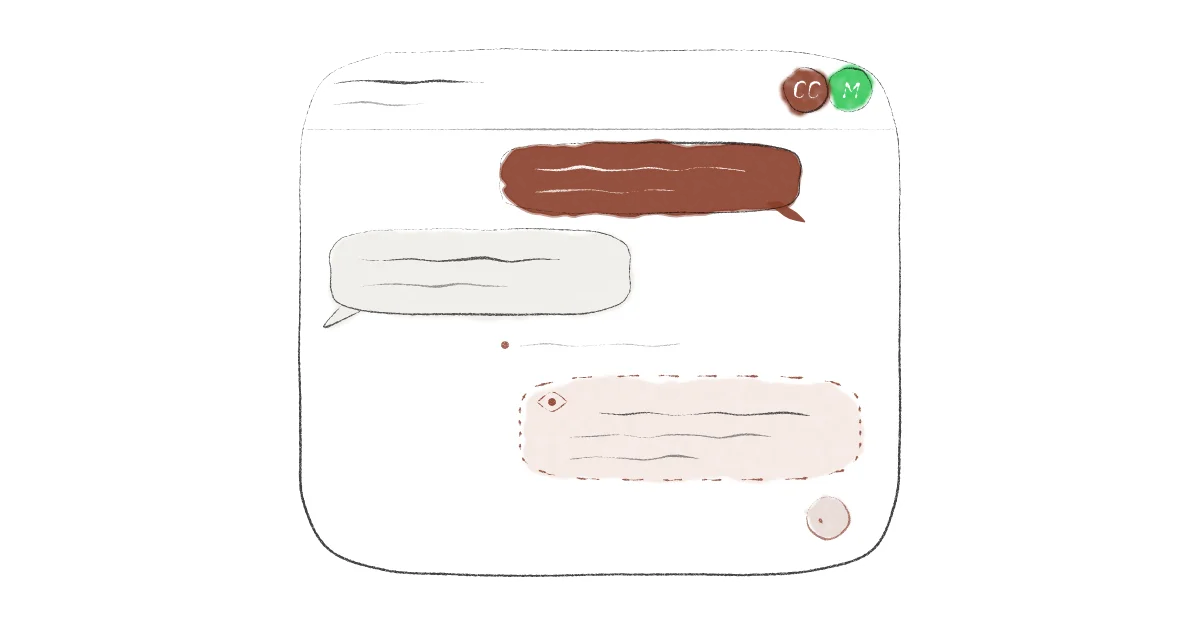
A refusal, a follow-up, a reply that calls for tact. Name the assistant in the thread, say the tone: it has read the thread and writes a draft only you can see. You send, fix or drop it.

Forty messages in the school parents’ group. One Summarize button, and the assistant tells you what is waiting on you, then the rest in three lines. In the morning, at the time you set, it rounds up every thread where someone is waiting for you.

Under a bubble in another language, a Translate button, and the translation reads in grey below. Set a thread so that everything arriving is translated right away, and what you send too. On the device, without sending a line to anyone.

A thread of its own, on iPhone and on Mac. A question, a photo, a PDF, a task on your machine: it runs at home around the clock, on your subscription, with no API key.
The Meta apps no longer run on your phone, so neither do their advertising SDKs. Your messages go through a relay of your own, never through our servers.
Unified inbox
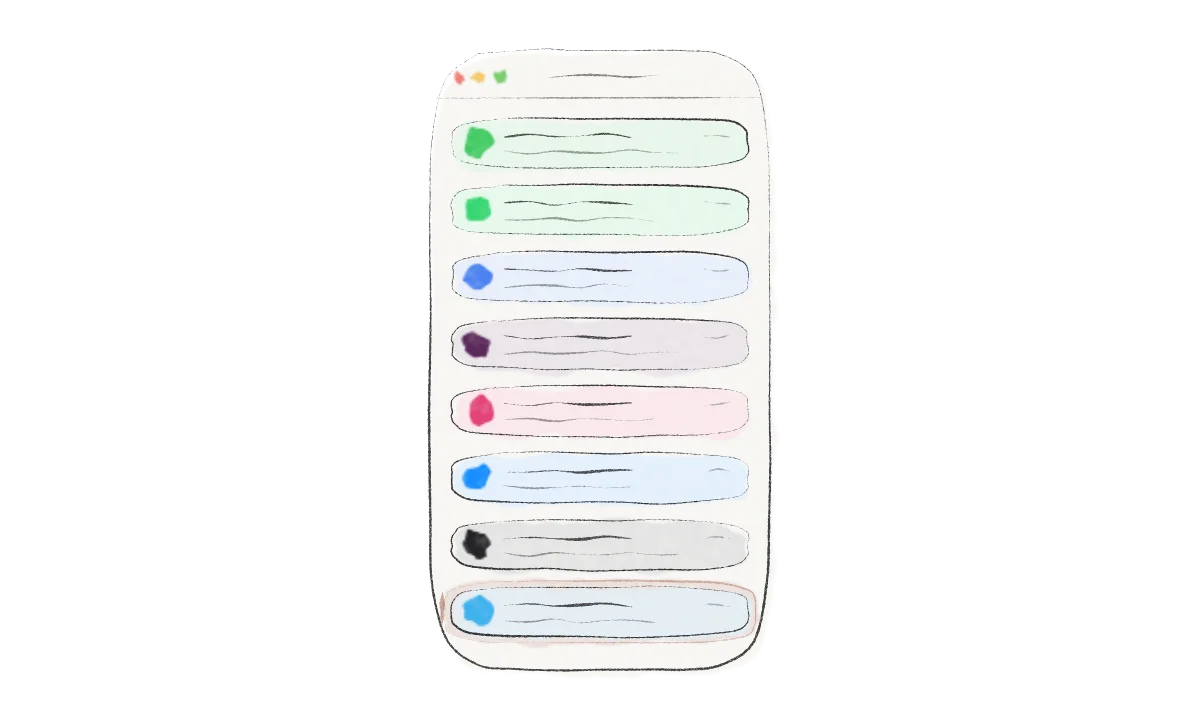
Every conversation lands in the same list, sorted by date, with its network badge. You reply from Correspondance and the message leaves through the right channel.
Not a web tab. A native app that speaks to each network like its official client.
AI agents
Claude Code, Hermes or another engine becomes a member of your inbox. It reads the thread before replying, runs on your Mac or your own machine, on your subscription. No API key to paste.
As soon as someone else is in the thread, nothing goes out without you. The agent writes a draft only you can see. You send it as is, fix it, or drop it.
Three settings per conversation, from the thread info. On request, it only writes when you name it. Suggests, it prepares a draft for every incoming message, visible to you alone. Replies alone, it answers on your behalf within the frame you give it.
An agent obeys only its owner and joins only the threads you invite it to. It works in a folder scoped to each conversation, never in your home folder.
Features

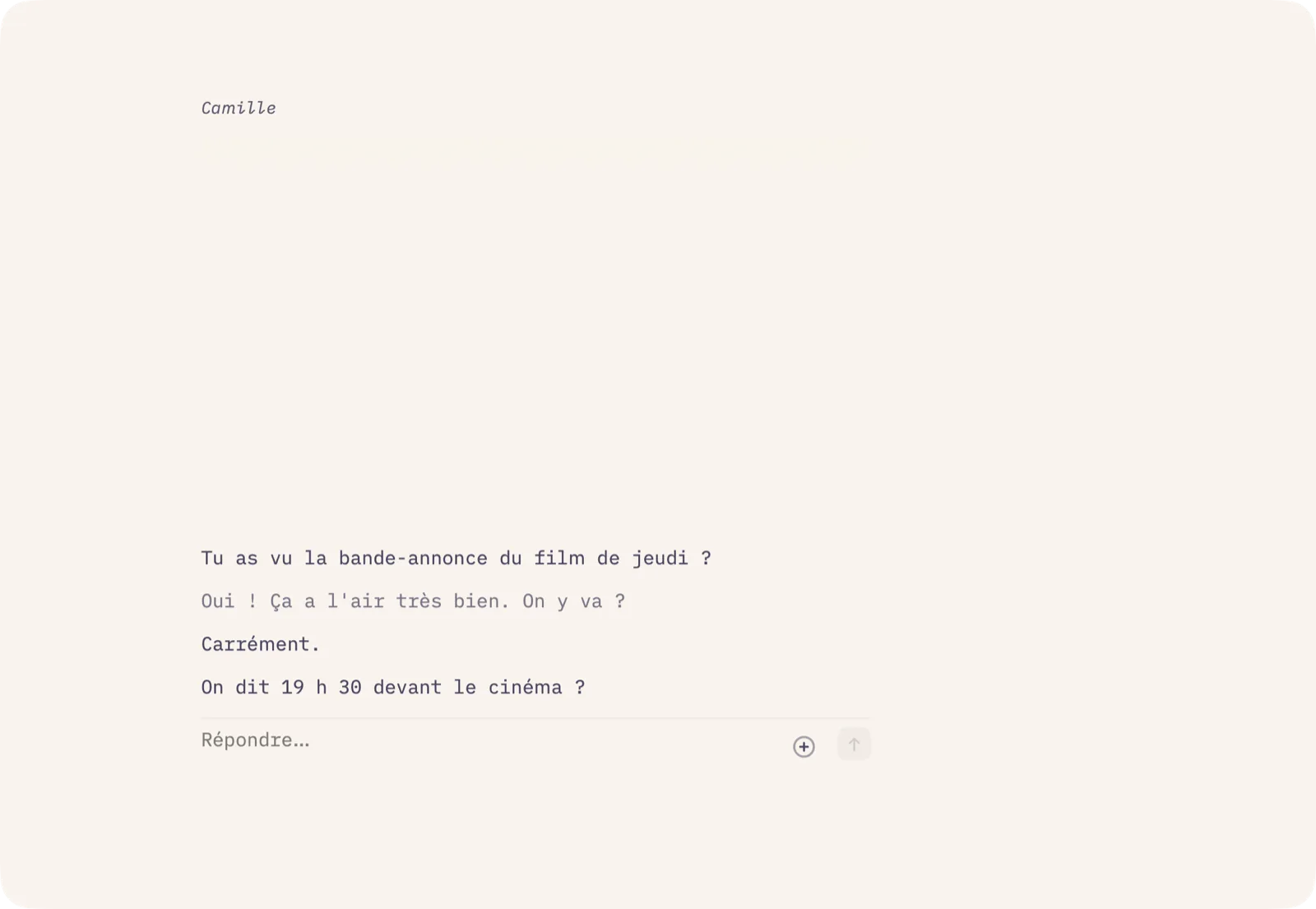
A global shortcut opens a card above everything. You reply, it vanishes. Without switching windows.

Detach a conversation into a small window that stays on top. Three sizes, light or dark.

⌘1 hides the list and leaves a single thread. The page turns from one conversation to the next, ⌘K finds one without leaving the page. ⌘2 brings the list back.

The unread count and quick reply, reachable from the Mac menu bar.

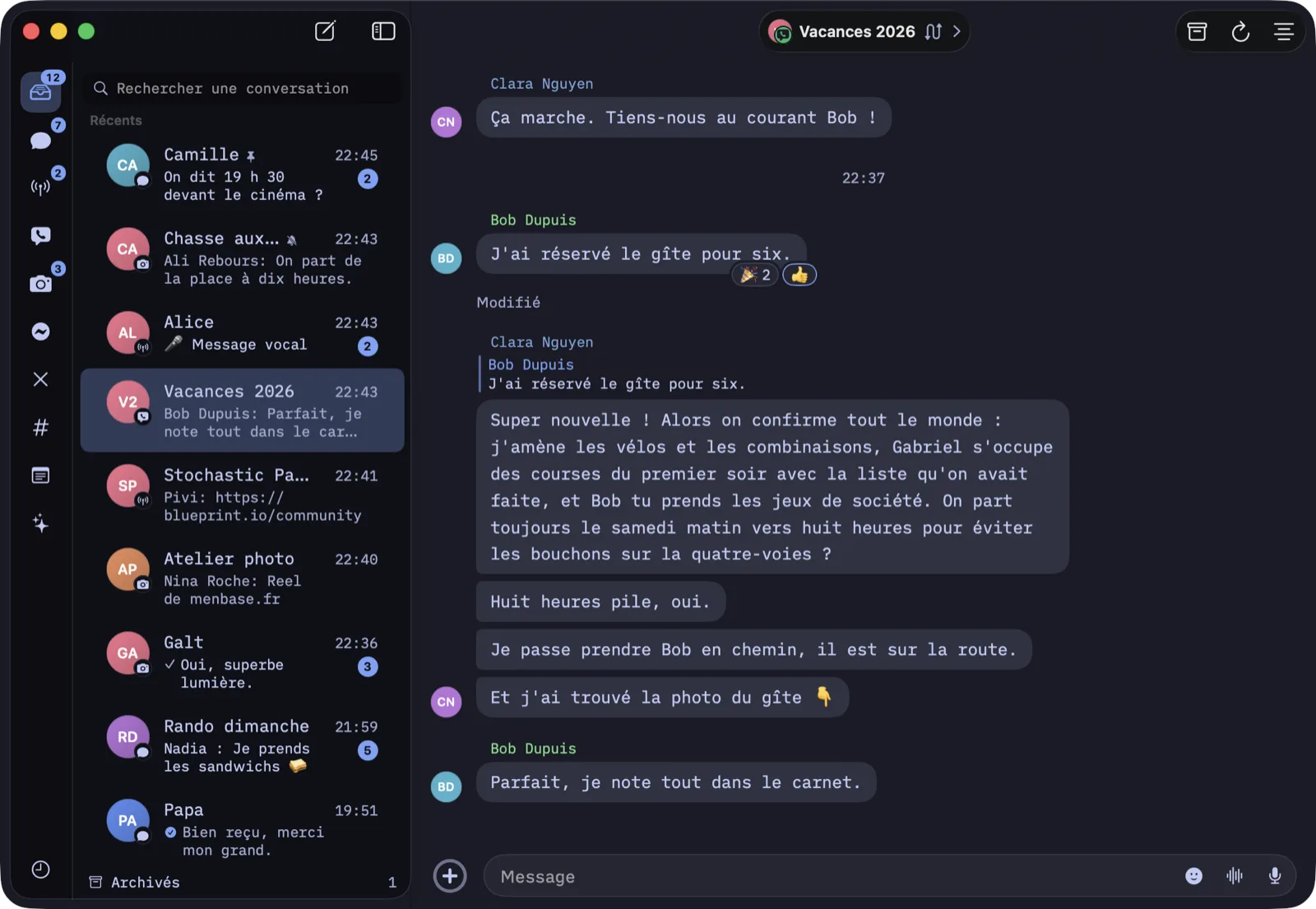
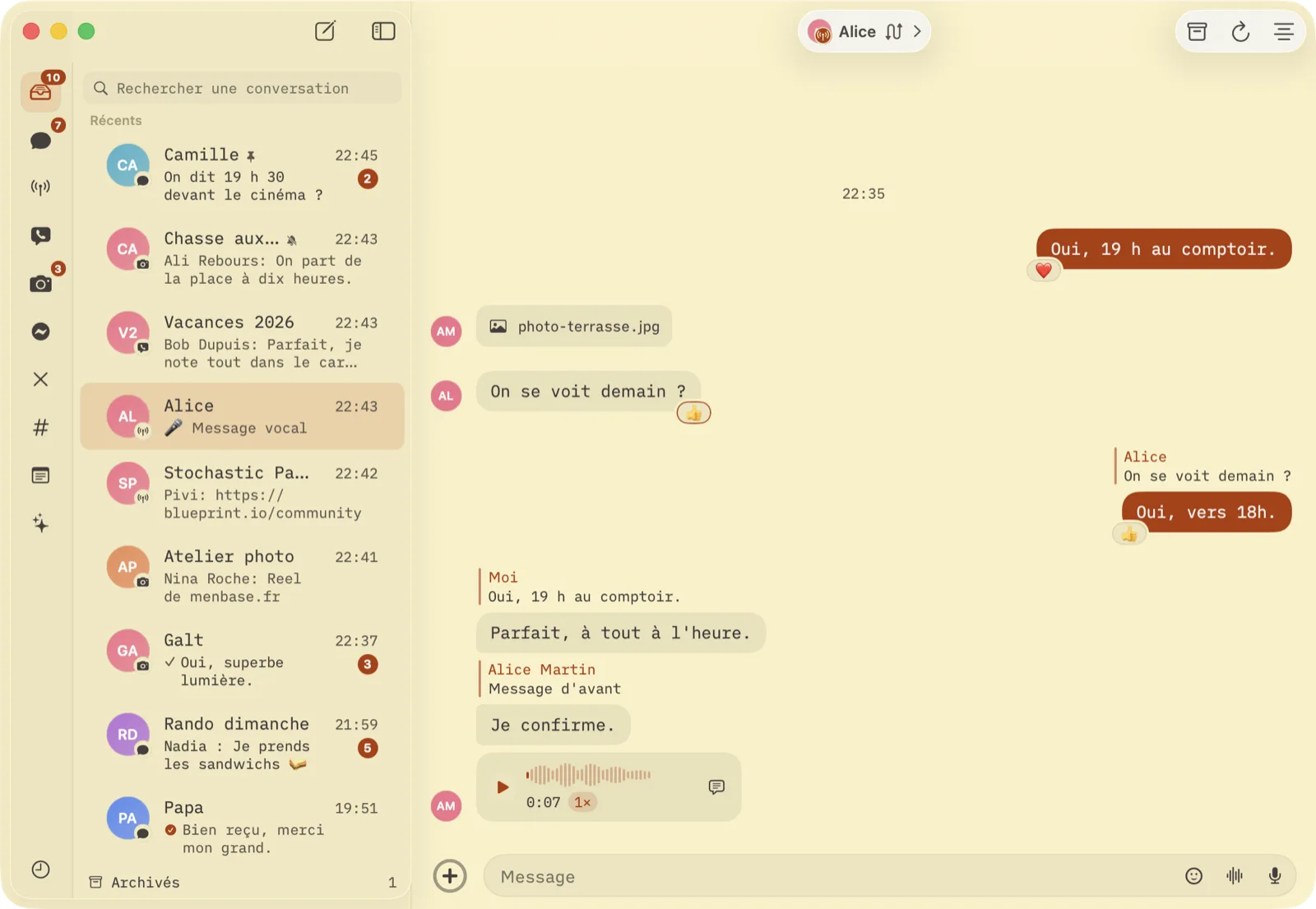
Paper, Wax and oak, Moonlight, Night ink. They follow the system or are set by hand.

From Photos, Safari or the Finder: Share, a person, Send. On iPhone and on Mac, without opening the app.

The same inbox, the same agents, the same drafts, the same merged chats. Rich notifications, reply from the notification, and your camera roll in place of the keyboard to send a photo or a video.

Translate under a bubble, or a whole thread up front, incoming and outgoing. Through Apple’s translation, on macOS 15 and iOS 18: nothing goes to a server.

Read without telling: no read receipt goes out, and unread counts stay as a reminder. ⌘⇧I on the Mac, the “…” menu on the iPhone. Replying or “Mark as read” are the only gestures that let the other person know.
Privacy
There is no Correspondance account and no Correspondance cloud. You install a Relay at home, in one click, and your devices talk to it encrypted.
The app reads the Messages database locally and sends through Messages. Nothing leaves the machine.
Signal, WhatsApp, Instagram, Messenger, X, Slack and Telegram are linked like one more device, through a relay installed on your Mac or a small machine.
Between your iPhone, your Mac and your Relay, everything travels encrypted. We hold no keys and no copy.
The agent runs on your Mac or your machine, on your subscription. Your conversations are sent to no additional service.
The Translate button uses Apple’s translation, on the machine. No text goes to a translation service.
Everything above can be checked: the code of the app, the Relay and the agent is on GitHub, under the MIT license.
Incognito mode cuts read receipts on every network: you open, you read, nobody knows. Only an explicit gesture tells them.
No usage statistics, no pixel, no advertising SDK.
Using Correspondance instead of the official apps is better for privacy on your phone: no Meta SDK runs there. It hides nothing more from the networks’ servers, which still see who writes to you and when, as with the official client.
A folder, a database, files. You copy them, back them up, delete them.
Compare
Unified inboxes exist. None puts an agent in the thread, and most route your messages through their servers.
| Correspondance | Classic unified inbox | Web clients in tabs | |
|---|---|---|---|
| iMessage, Signal, WhatsApp, Instagram, Messenger, X, Slack, Telegram | ✓ | ✓often more networks | ✓except iMessage |
| AI agents in conversations | ✓draft to approve in front of others | ||
| Incognito mode, no read receipts | ✓every network | ✓ | |
| On-device translation | ✓macOS 15, iOS 18 | ||
| Messages hosted at home | ✓your own Relay | vendor servers | ✓nothing centralised |
| Native Mac and iPhone app | ✓and Linux | ✓ | web views |
| Share from other apps | ✓iPhone and Mac | ✓iPhone only | |
| Search across every network | ✓ | ✓ | |
| Account to create | None | Required | None |
| Price | Free, foreveropen source, MIT | Free + subscription | Subscription |
FAQ
Yes, forever: no limit on networks or time, no subscription, no paid tier. The code is public under the MIT license, on GitHub: anyone can read it, build it, change it or fork it. An app whose code is free cannot turn paid behind your back.
For iMessage, yes: it is the only place Apple lets those messages be read. The Mac can stay closed in a corner, the iPhone connects to it. For the other networks, the Relay runs on a Mac or on any small Linux box — and Correspondance exists for Linux too: same inbox, same Focus, in a binary with no dependencies.
No. You link your existing networks as you would link one more computer: a QR code for Signal and WhatsApp, a login window for Instagram, Messenger and Slack. For X, import the session from Brave, Chrome, Edge or Arc in one click, then the four-digit X Chat code. For Telegram, your number, then the code sent to the app, and your password if two-step verification is on. Your linked accounts can be viewed and disconnected from Settings › Accounts.
On your Mac, in one click from the settings: it stops when you quit the app. Or on a machine of yours that stays on, for an agent reachable day and night, even with the Mac closed.
Not by default. As soon as someone else is in the thread, it proposes a draft only you can see, and nothing goes out without your click. Thread by thread, you can switch it to “Replies alone”: it then answers on your behalf within the frame you write, ten times an hour at most, every message marked in your thread, and it hands over to you as soon as the conversation leaves the frame. One click brings it back to drafts.
What you address to it, and the latest messages of the thread where it is named, so it can answer in context. It does not dig through your history and does not read threads it is not invited to. The Summarize button and the morning round-up work on what is unread, not on the archives.
Claude Code on your subscription, and Hermes. An agent is a Matrix user of the Relay: any engine that can read and write in a room can become one.
Same starting idea: one inbox for every network. Two differences. With Beeper, your messages pass through their servers; with us, through a Relay of your own. And Correspondance welcomes AI agents into conversations, with a draft to approve whenever someone else is present.

Free forever, open source, on iPhone, Mac and Linux.
Already downloaded times on Mac.